

Violin, Alfonso Dallla Corte(Della Corte), Naples
Naples, Italy
19世紀ナポリ派を代表する製作家の一人、Alfonso Della Corte(しばしば "Dalla Corte" と表記されますが、正しくは Della Corte)は、1836年にナポリで生まれ、1884年にコレラの流行によりその生涯を閉じました。
Della Corteは、ナポリ派の名工 Vincenzo Jorio に師事し、その工房を継承したとされます。また、同時代を代表する製作家 Vincenzo Postiglione とも協働し、19世紀後半のナポリ製作界を支えた重要な存在でした。
彼の作品は、ナポリ派の伝統を受け継ぎながらも、とりわけNiccolò Gaglianoのモデルを巧みに取り入れたことで知られています。ガリアーノ作品を忠実に再現した楽器も数多く製作しており、その完成度の高さから、現代でも優れたコピー作品として高い評価を受けています。
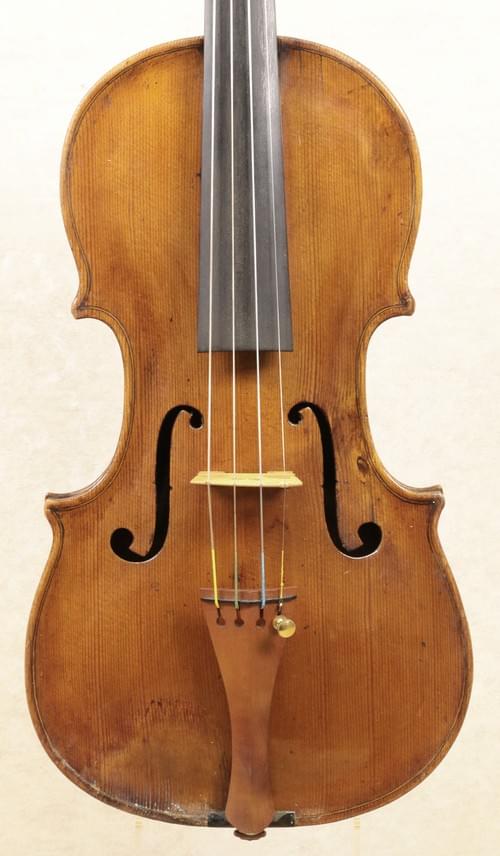
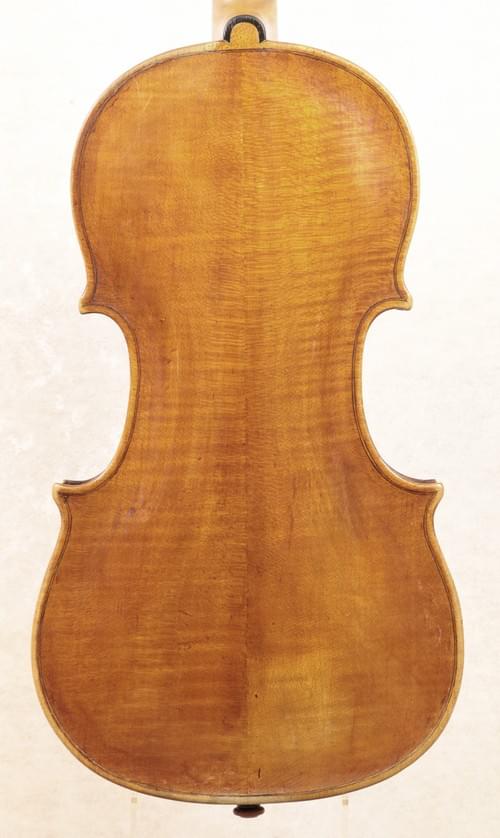
一方で、透明感のある黄金色から赤褐色のニスはナポリ派としてはやや異色で、むしろミラノ派を思わせる上品な仕上がりと評されることもあります。輪郭やアーチングの均整が良く、音孔やスクロールにも洗練された造形が見られるなど、19世紀イタリア製作を代表する高い技術力が随所に表れています。
現在では国際的なオークション市場でも安定した評価を受けており、その作品は演奏用楽器としてはもちろん、19世紀ナポリ派を代表する製作家の作品として高い人気を誇っています。
【この楽器について】
本器は19世紀中頃~後半にかけてナポリで製作されたと考えられる作品で、Jean-Jacques Rampalによる鑑定書が付属しています。
ボディ長は351mmとややコンパクトなサイズながら、それを感じさせない豊かな響きと優れた音量を備えています。レスポンスは非常に軽快で、発音の良さと自然な弾き心地を兼ね備えており、高い演奏性を実感できる一本です。
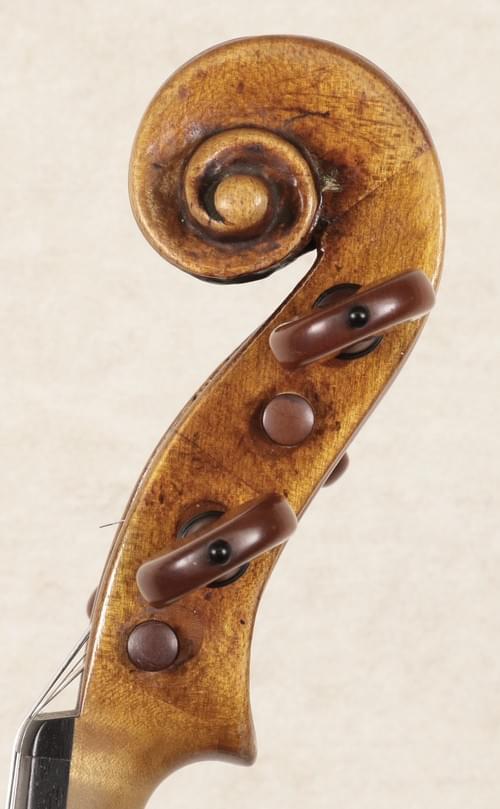
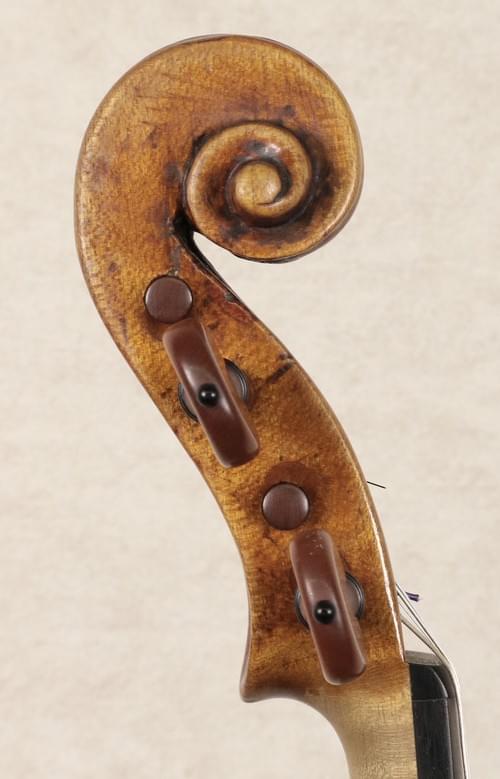
現在のスクロールは後年に製作されたものへ交換されていますが、楽器全体の完成度や演奏性能を損なうものではなく、実用楽器として優れたコンディションを維持しています。
コンパクトなサイズから生まれる扱いやすさと、ナポリ派らしい温かみと奥行きのある音色を兼ね備えた、演奏家にぜひ手に取っていただきたい魅力的な作品です。
Alfonso Della Corte (1836–1884)
Naples, Italy
Alfonso Della Corte (1836–1884), sometimes mistakenly referred to as "Dalla Corte," was one of the leading representatives of the Neapolitan school of violin making in the nineteenth century. Born in Naples, he established himself as an important figure in the city's rich violin-making tradition before his life was tragically cut short during the cholera epidemic of 1884.
Della Corte is believed to have trained under the renowned Neapolitan maker Vincenzo Jorio, eventually succeeding him in his workshop. He also collaborated with Vincenzo Postiglione, another prominent figure of the period, and together they played a significant role in preserving and advancing the Neapolitan tradition during the second half of the nineteenth century.
His instruments faithfully reflect the heritage of the Neapolitan school while showing a particular admiration for the work of Niccolò Gagliano. Della Corte produced numerous instruments inspired by Gagliano's models, and the quality of these interpretations continues to be highly regarded by musicians and collectors alike.
His varnish, ranging from transparent golden hues to rich reddish-brown, is often considered more refined than that typically associated with the Neapolitan school, occasionally drawing comparisons with the elegance of Milanese craftsmanship. Well-balanced arching, graceful outlines, and finely carved f-holes and scrolls further demonstrate the exceptional level of workmanship found throughout his instruments.
Today, Alfonso Della Corte's violins enjoy a solid reputation on the international market and remain highly sought after, both as outstanding concert instruments and as fine examples of nineteenth-century Neapolitan violin making.
About This Instrument
This violin is believed to date from the mid- to late nineteenth century and was made in Naples. It is accompanied by a certificate from the distinguished French expert Jean-Jacques Rampal.
With a back length of 351 mm, it is slightly more compact than the standard full-size violin. Despite its modest dimensions, the instrument produces a remarkably rich, powerful, and well-balanced tone that far exceeds what its size might suggest.
Its response is exceptionally quick and effortless, offering immediate articulation, excellent projection, and a naturally comfortable playing experience. These qualities make it an instrument of outstanding playability, equally rewarding for both professional performers and discerning musicians.
The scroll is a later replacement, a fact clearly acknowledged in the accompanying certificate. However, this does not detract from the instrument's overall musical qualities or structural integrity, and it remains an excellent example of a fine nineteenth-century Neapolitan violin.
Combining the comfort and ease of a slightly smaller body with the warm, resonant voice characteristic of the Neapolitan school, this violin offers a compelling blend of elegance, responsiveness, and tonal richness, making it a highly attractive instrument for the serious performer.

