

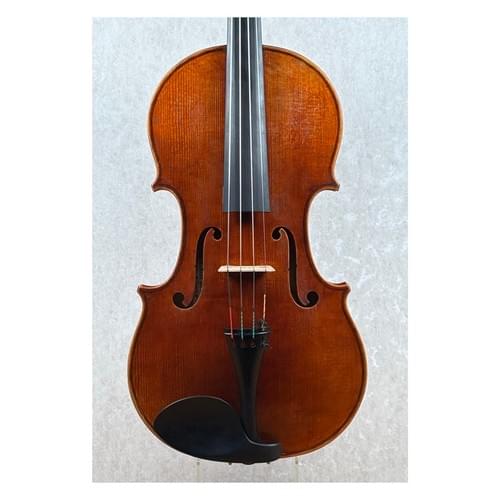
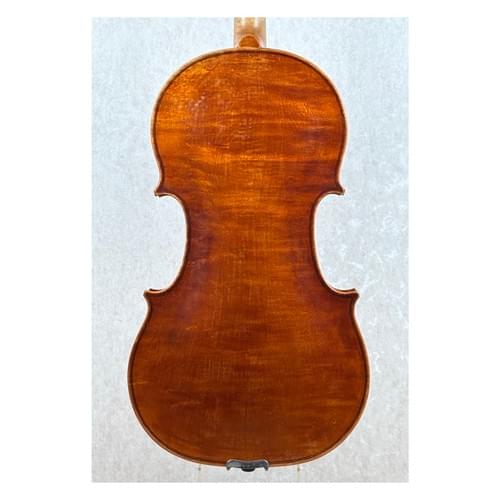
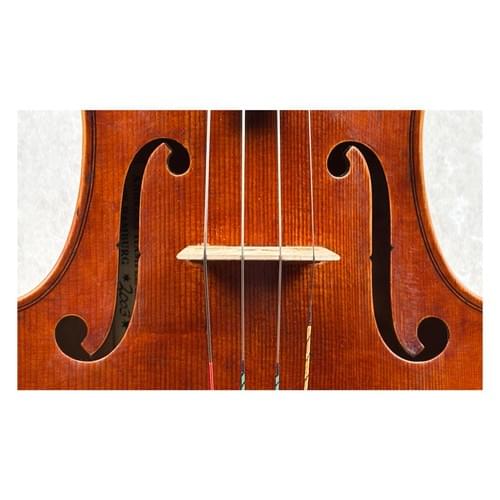
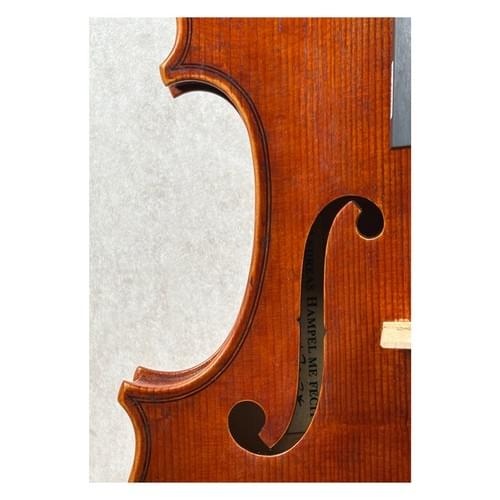
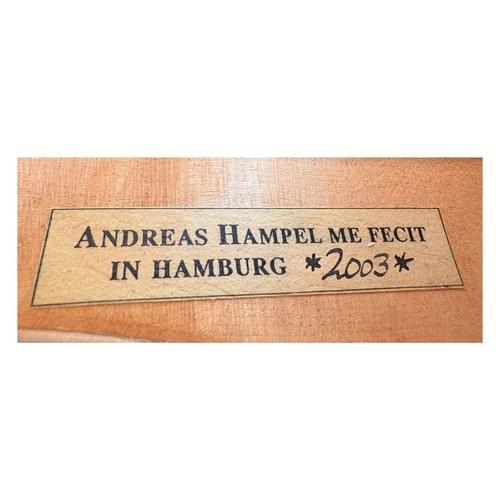
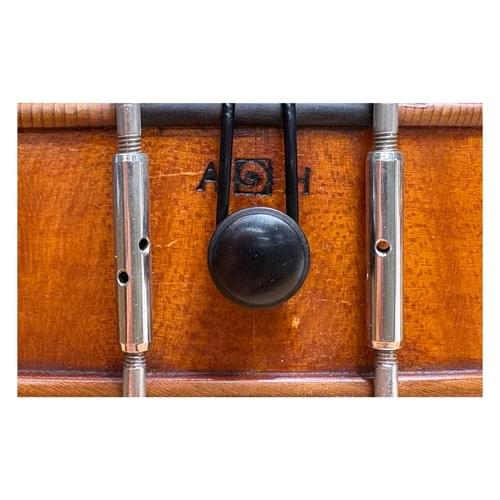
Viola (41.2㎝) , Andreas Hampel, Hamburg 2003
Mittenwaldのヴァイオリン製作学校を卒業後、南ドイツで経験を積み、イタリアではJürgen von Stietencronによるマスタークラスにも参加。1991年にはFreiburgのJacobus Stainer Competitionで入賞し、1992/93年にドイツのGeigenbaumeister(マイスター)の資格を取得しました。
1992年にHamburgで自身の工房を設立し、現在はSusanne RiebesehlとともにHamburg-Altonaに工房を構えています。新作製作においては、歴史的な名器を単純に複製するのではなく、古典的なイタリアの楽器を研究しながら、現代の演奏家の要求に応える楽器として再解釈することを重要なテーマとしています。
また彼自身も長年ヴァイオリンを学び、現在はオーケストラでヴァイオリンを、弦楽四重奏ではヴィオラを演奏しています。製作者自身がヴィオラを演奏するという背景も、彼のヴィオラ製作を考えるうえで興味深い要素です。
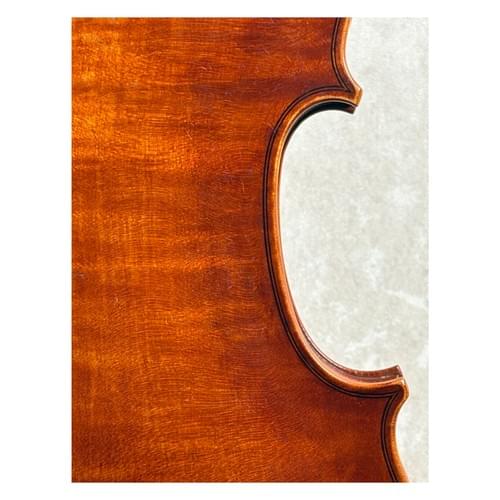
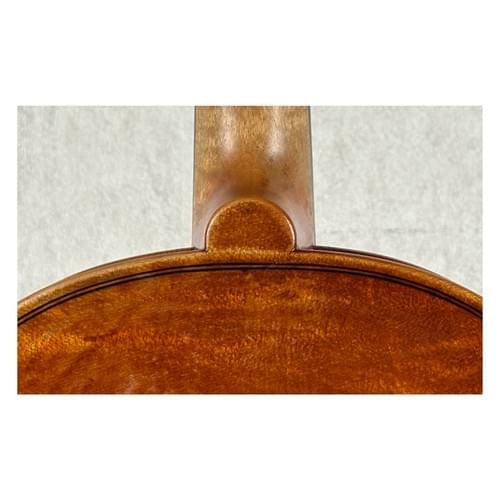
今回ご紹介するヴィオラは、裏板には一枚板のメイプルが用いられ、幅広く柔らかな杢が表情豊かに現れています。赤みを含んだ温かいオレンジブラウンのニスは、見る角度や光によって木材の杢を穏やかに浮かび上がらせます。
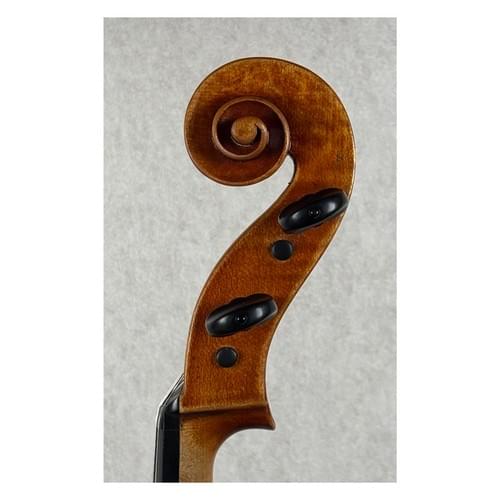
表板には細かく比較的規則的な木目を持つスプルースが用いられ、伸びやかなf字孔、明確にまとめられたコーナーとエッジワーク、端正なスクロールなど、随所に丁寧な製作を見ることができます。
製作から20年以上を経た現在は、新作当時とはまた異なる自然な風合いも加わり、現代製作楽器でありながら時間を重ねた一本ならではの佇まいを見せています。
彼のヴィオラ製作を語るうえで、現在特に注目されるのが2026年1月、Philharmonie de Parisで開催された国際ヴィオラ製作コンクールです。
63名の製作家が参加したプロフェッショナル部門において、彼のヴィオラは第1位を受賞。さらに、最終演奏を聴いた聴衆による特別聴衆賞(音響)も同時に受賞しました。
審査では製作面だけでなく、セミファイナルおよびファイナルでOrchestre de Parisの奏者によるブラインド演奏も行われており、製作と音の両面から評価された結果となりました。
受賞作はStradivari 1672年製“Gustav Mahler”ヴィオラを再解釈し、415mmに設計した作品でした。もちろん今回ご紹介する2003年製ヴィオラとは別の楽器ですが、20年以上にわたりヴィオラ製作を続けてきた製作家が、現在その分野で国際的に高い評価を受けているという点は、本作を考えるうえでも興味深い背景といえるでしょう。
Andreas Hampel
Hamburg, 2003 — Viola
Andreas Hampel, based in Hamburg, is a distinguished contemporary German violin maker.
After graduating from the Mittenwald School of Violin Making, he gained professional experience in southern Germany and attended masterclasses in Italy with Jürgen von Stietencron. He received recognition at the Jacobus Stainer Competition in Freiburg in 1991, completed his master craftsman examinations in 1992/93, and established his workshop in Hamburg in 1992.
Today, together with Susanne Riebesehl, he works from their workshop in Hamburg-Altona. A central aspect of their new making is the study and reinterpretation of great historical Italian instruments — not simply as reproductions, but as instruments developed in dialogue with the needs of contemporary musicians.
Hampel is also a musician himself. Following many years of violin training, he currently plays violin in an orchestra and viola in a string quartet — an interesting perspective when considering his work as a viola maker.
The present viola was made in Hamburg in 2003.
The instrument features a handsome one-piece maple back with broad, softly figured grain. A warm orange-brown varnish with reddish tones allows the natural character of the wood to emerge differently as the light changes.
The spruce table shows relatively fine and regular grain, complemented by elongated f-holes, clearly defined corners and edgework, and a cleanly executed scroll.
More than twenty years after its construction, the instrument has also developed the natural character of an instrument that has been played and lived with, giving this contemporary viola a visual maturity distinct from a newly made instrument.
An important recent chapter in Andreas Hampel's career came in January 2026 at the International Viola Making Competition at the Philharmonie de Paris.
Among 63 participating makers, Hampel's viola received First Prize in the professional “Talents of Today” category. It also received the Special Audience Prize for sound.
The competition included both craftsmanship assessment and blind playing evaluations, with instruments performed by members of the Orchestre de Paris during the semifinal and final stages.
The prize-winning instrument was Hampel's interpretation of the 1672 Stradivari “Gustav Mahler” viola, redesigned to a body length of 415 mm. It is, of course, a different instrument from the present 2003 viola. Nevertheless, Hampel's international recognition for viola making more than two decades later provides an interesting perspective from which to view this earlier example of his work.
Made approximately a decade after the establishment of his Hamburg workshop, this viola offers an opportunity to experience an earlier period in the work of a maker who continues to develop his craft and whose viola making received major international recognition in Paris in 2026.

