

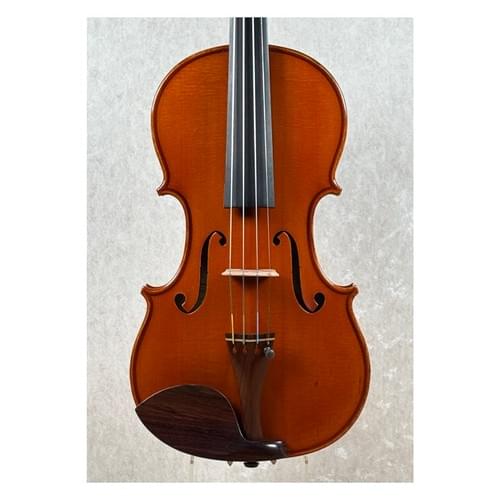
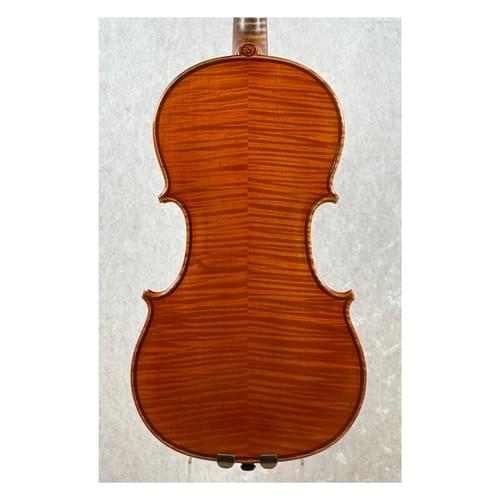
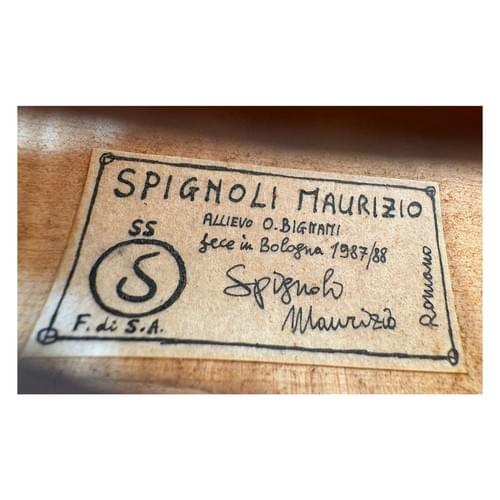
Violin, Maurizio Spignoli, Bologna 1987/88
音楽家としての背景を持つとともに、ボローニャで弦楽器製作を学び、20世紀ボローニャ派を代表する製作家 Otello Bignami(1914–1989) に師事しました。BignamiはGaetano Pollastriから受け継いだボローニャの製作伝統を次世代へ伝えることに尽力した人物で、Spignoliはその最後期の弟子の一人として記録されています。
Spignoliの作品は、ボローニャの伝統的なモデルを基礎とするものとして知られています。1990年にはBagnacavalloの製作コンクールでもメダルを獲得しており、Bignamiから次世代へと受け継がれたボローニャ派の流れの中に位置づけられる製作家です。
今回ご紹介するヴァイオリンは、1987年から1988年にかけてBolognaで製作された一挺です。
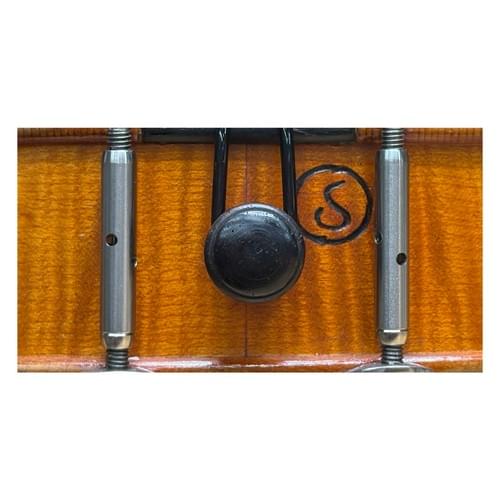
ラベルには “SPIGNOLI MAURIZIO / ALLIEVO O. BIGNAMI / fece in Bologna 1987/88” と記され、自らがOtello Bignamiの弟子であることを明記しています。また、裏板のボタンおよびエンドピン付近には、円で囲まれた特徴的な「S」のブランドを見ることができます。
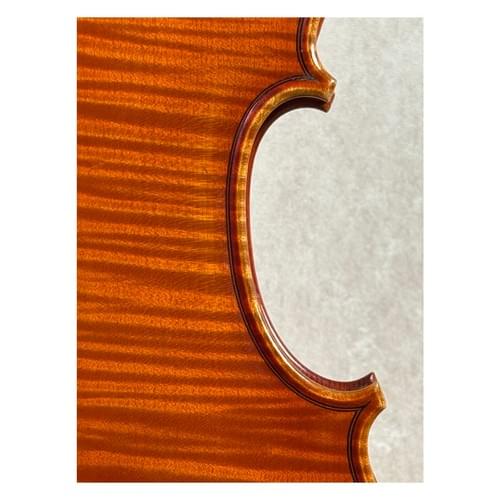
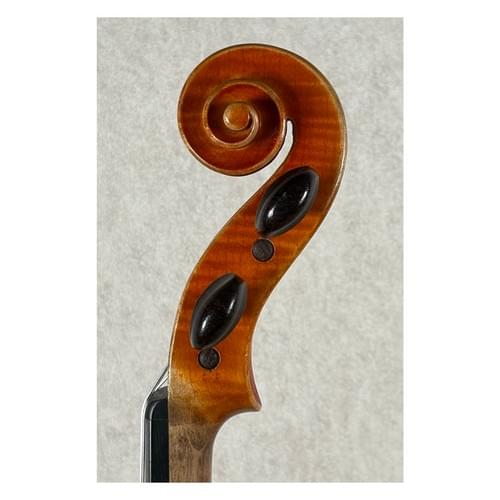
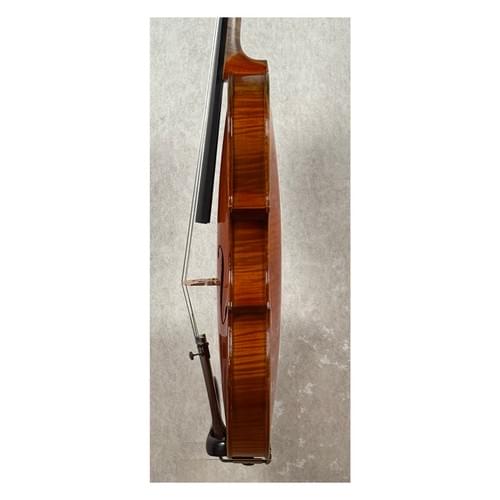
二枚板のメイプルによる裏板には細かく明瞭な杢が広がり、同様に美しい杢を持つ材が側板やスクロールにも用いられています。透明感の高いゴールデン・オレンジからアンバー系のニスが木材の表情を鮮明に浮かび上がらせ、楽器全体に明るく統一感のある外観を与えています。
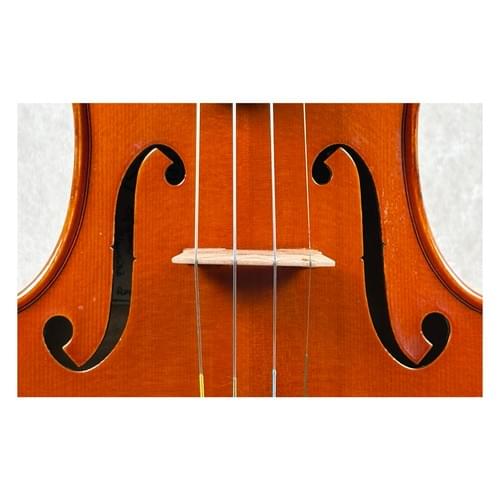
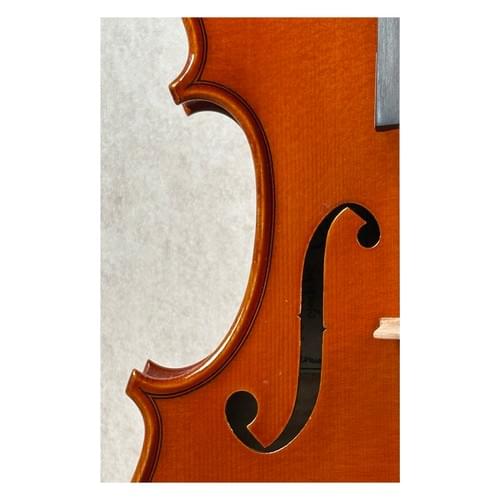
表板には均整の取れたスプルースが用いられ、細身で伸びやかなf字孔、明瞭なエッジワークとコーナー、丁寧に収められたパーフリングなど、随所に端正な仕事を見ることができます。
さらに本作は、同年代の他の楽器と共に実際に比較試奏した中でも、特に音色と演奏性に魅力を感じた一挺です。これは製作者の作品全般についての評価ではなく、あくまで今回の個体についての当店での印象ですが、外観や製作背景だけでなく、演奏する楽器としてもぜひ実際にお試しいただきたい一本です。
本楽器には、Alberto Giordano氏による鑑定書が付属します。
Maurizio Spignoli
Bologna, 1987/88
Maurizio Spignoli (1958–2007) was an Italian violin maker associated with the continuation of the Bolognese violin-making tradition in the late twentieth century.
With a background as both a musician and a luthier, Spignoli studied violin making in Bologna under Otello Bignami (1914–1989), one of the most important figures in twentieth-century Bolognese violin making. Bignami devoted considerable effort to passing the city's violin-making tradition to a new generation, and Spignoli is documented among his later pupils.
Spignoli's instruments are associated with traditional Bolognese models, continuing a line of craftsmanship transmitted through Bignami. His work also received recognition at the Bagnacavallo violin-making competition in 1990.
The violin presented here was made in Bologna in 1987/88.
Its manuscript label reads “SPIGNOLI MAURIZIO / ALLIEVO O. BIGNAMI / fece in Bologna 1987/88,” explicitly identifying Spignoli as a pupil of Otello Bignami. In addition, the maker’s distinctive “S” brand enclosed within a circle can be seen both on the button of the back and near the endpin.
The two-piece maple back displays fine, clearly defined figure, complemented by similarly attractive maple in the ribs and scroll. A highly transparent golden-orange to amber varnish allows the figure of the wood to remain particularly vivid and gives the instrument a warm and harmonious appearance.
The spruce table displays regular grain, together with slender, elongated f-holes, clearly defined edgework and corners, and neatly executed purfling.
Furthermore, when compared and played alongside other instruments from a similar period, this particular violin made an especially strong impression on us for its sound and playing qualities. This is our observation of the individual instrument rather than a general assessment of the maker’s work. Beyond its craftsmanship and historical background, it is a violin that we particularly recommend experiencing in person.
The violin is accompanied by a certificate by Alberto Giordano of Genoa.

